The FIFA World Cup 2030 will be a landmark edition of football’s biggest tournament, celebrating 100 years since the first World Cup in 1930. To honor this centenary, FIFA has planned a unique, multi-continental event that highlights both the history and the global reach of the sport.
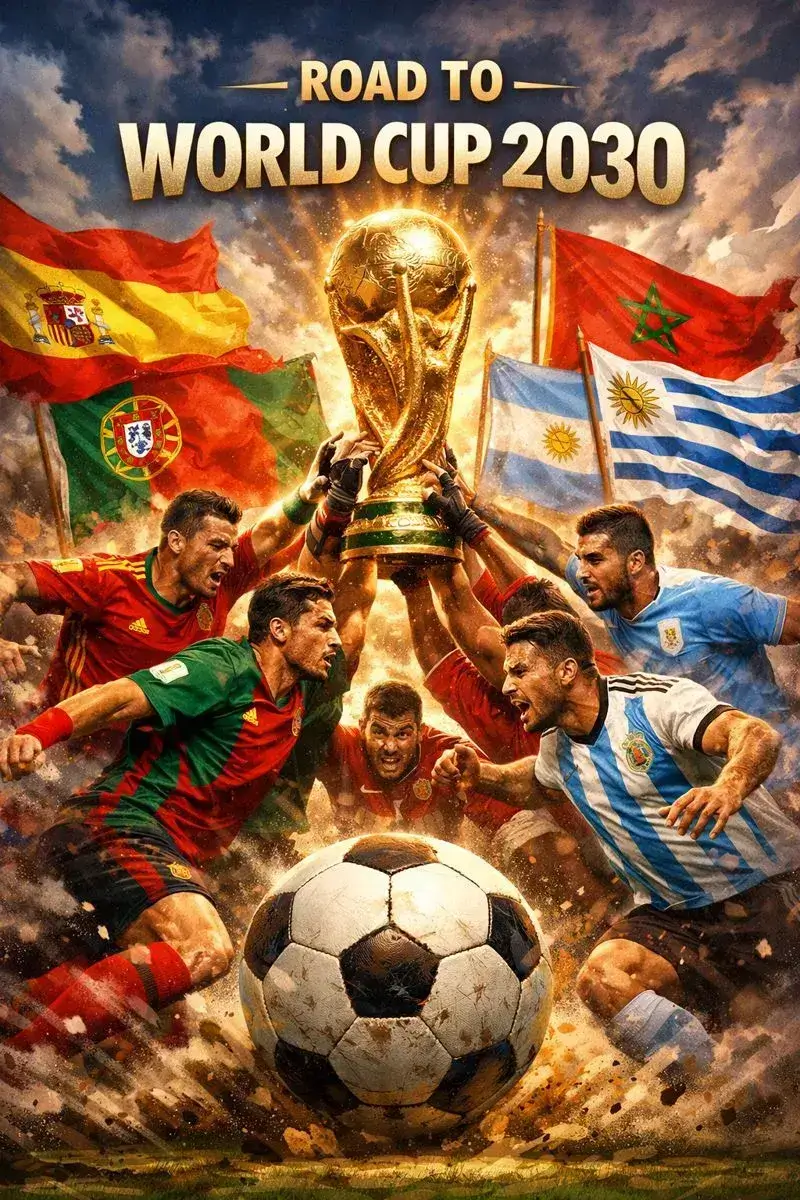
The tournament will be primarily hosted by Spain, Portugal, and Morocco, marking the first time the World Cup is held across Europe and Africa together. In addition, Uruguay, Argentina, and Paraguay—countries deeply connected to football history—will each host one opening match, paying tribute to South America, where the first World Cup took place.
Like recent editions, the 2030 World Cup is expected to feature 48 teams, bringing together nations from all confederations to compete at the highest level. Beyond the football, the tournament aims to promote cultural exchange, unity, and the lasting legacy of the game across continents.
Overall, the 2030 FIFA World Cup is set to be more than just a competition—it will be a global celebration of 100 years of football history. ⚽🌍
Why the FIFA World Cup 2030 Is Special
The 2030 FIFA World Cup is special for several important reasons that make it unique in football history:
- 100-Year Anniversary
The 2030 tournament marks 100 years since the first FIFA World Cup in 1930, making it a centenary celebration of the sport’s biggest competition. - Multi-Continental Hosting
It will be the first World Cup hosted across three continents—Europe, Africa, and South America—showing how truly global football has become. - Historic Tribute to South America
Uruguay, Argentina, and Paraguay will each host an opening match, honoring South America’s role in football history, especially Uruguay, where the first World Cup was held. - New Era of Global Unity
With matches spread across different regions, the tournament highlights football’s power to connect cultures, nations, and people worldwide. - Modern Format, Historic Meaning
Featuring 48 teams, the World Cup combines a modern, inclusive format with deep respect for tradition and history.
Overall, the 2030 World Cup is special because it is not just a tournament—it is a global celebration of football’s past, present, and future. ⚽🌍
Celebrating 100 Years of the FIFA World Cup
The year 2030 marks a historic milestone—100 years of the FIFA World Cup, a tournament that began in 1930 and grew into the most watched sporting event in the world. Over a century, the World Cup has created unforgettable moments, legendary players, and memories that unite billions of fans across nations and cultures.
From Uruguay hosting and winning the first tournament to the modern, global competition we see today, the World Cup reflects how football has evolved while remaining a symbol of passion, teamwork, and national pride. Each edition has added to the game’s rich legacy, inspiring generations of players and fans.
The 2030 World Cup is more than a competition—it is a tribute to football’s history, a celebration of its global impact, and a reminder of how the beautiful game continues to bring people together after 100 incredible years. ⚽🌍
Host Countries of the FIFA World Cup 2030
The FIFA World Cup 2030 will have a unique set of host countries, making it one of the most historic tournaments ever held.
Main Host Nations
The tournament will be primarily hosted by three countries:
- Spain
- Portugal
- Morocco
These nations will host the majority of matches, including most of the group-stage games and the later knockout rounds. This will also be the first World Cup jointly hosted by Europe and Africa, highlighting strong cooperation between neighboring regions.
Centenary Host Nations
To celebrate the 100th anniversary of the FIFA World Cup, three South American countries will each host one opening match:
- Uruguay – host of the first World Cup in 1930
- Argentina
- Paraguay
This special decision honors South America’s central role in football history and connects the modern tournament to its origins.
Why This Is Historic
- First World Cup held across three continents
- Symbolic return to the birthplace of the World Cup
- A global celebration of football’s past and future
Together, these six host countries make the 2030 World Cup a truly worldwide event, reflecting the global spirit of the beautiful game. ⚽🌍
Main Hosts: Spain, Portugal, and Morocco
The FIFA World Cup 2030 will be mainly hosted by Spain, Portugal, and Morocco, forming a historic partnership between Europe and Africa. These three countries will stage the majority of matches throughout the tournament, including key group games and later knockout rounds.
Spain brings a rich football tradition, world-class stadiums, and experience from hosting major international tournaments.
Portugal, known for its passionate fans and modern infrastructure, adds strong organizational experience and football heritage.
Morocco becomes the first North African country to host World Cup matches, representing a major milestone for African football and showcasing the region’s growing influence on the global stage.
Together, Spain, Portugal, and Morocco symbolize cooperation, cultural connection, and football unity across continents, making the 2030 World Cup not only a sporting event but also a celebration of global togetherness. ⚽🌍
Opening the FIFA World Cup 2030 Matches in South America (Uruguay, Argentina, Paraguay)
As part of the centenary celebration of the FIFA World Cup 2030, the 2030 tournament will begin with special opening matches in South America, honoring the continent where the World Cup was born.
- Uruguay will host one opening match, paying tribute to its role as the host and champion of the very first World Cup in 1930.
- Argentina, a nation with a rich football legacy and multiple World Cup titles, will also host an opening match, representing South America’s lasting impact on the game.
- Paraguay completes the tribute by hosting an opening match as well, recognizing its historical contribution to football in the region and its role as the home of CONMEBOL.
These opening matches symbolically connect the past and the present, allowing the tournament to begin where the World Cup story first started, before moving on to the main hosts in Europe and Africa. It is a powerful reminder of football’s history and its global journey over 100 years. ⚽🌎
Stadiums and Host Cities for FIFA WORD CUP 2030
The FIFA World Cup 2030 will feature a diverse set of stadiums and host cities spread across three continents, reflecting the tournament’s global and historic character. While final selections will be confirmed closer to the event, the host nations are expected to use a mix of iconic football venues and modern stadiums.
Main Host Countries
Spain
Spain is expected to host matches in major cities such as Madrid, Barcelona, Seville, and Bilbao, using large-capacity stadiums known for their football history and passionate crowds.
Portugal
Portugal’s matches will likely be held in cities including Lisbon and Porto, featuring modern stadiums that have previously hosted major international tournaments.
Morocco
Morocco plans to showcase cities such as Casablanca, Rabat, Tangier, Marrakesh, and Agadir, highlighting both newly developed stadiums and upgraded venues. This will be a major moment for African football infrastructure.
Opening Match Host Cities (South America)
- Montevideo, Uruguay – honoring the location of the first World Cup
- Buenos Aires, Argentina – one of football’s most iconic cities
- Asunción, Paraguay – symbolizing South America’s football heritage
A Global Football Stage
Across all host cities, stadiums are expected to meet FIFA’s modern standards for sustainability, safety, and fan experience. Together, these venues will provide a fitting stage for celebrating 100 years of World Cup history, combining tradition with innovation. ⚽🌍
Tournament Format and Structure for fifa word cup 2030
Number of Teams Participating
The FIFA World Cup 2030 is expected to feature 48 national teams, continuing the expanded format introduced in recent tournaments.
This format allows more countries from every continent to take part, making the competition more inclusive and truly global. Teams will qualify through their respective continental tournaments, giving emerging football nations greater opportunities to compete on the world’s biggest stage.
With 48 teams, the FIFA World Cup 2030 will offer:
- More matches and exciting group-stage action
- Greater global representation
- Increased chances for historic first-time appearances
The expanded lineup perfectly fits the spirit of the centenary World Cup, celebrating 100 years of football by bringing together more nations than ever before. ⚽🌍
Group Stage Format
The FIFA World Cup 2030 is expected to use the 48-team group stage format first introduced for the expanded World Cup era.
Structure
- 48 teams divided into 12 groups of 4 teams
- Each team plays 3 group-stage matches
- Matches are played in a round-robin format (each team plays the others in its group once)
Qualification to Knockout Stage
- The top 2 teams from each group automatically qualify (24 teams)
- The 8 best third-placed teams also advance
- This creates a Round of 32, followed by the traditional knockout rounds
Why This Format Works
- Avoids one-match eliminations and ensures fairness
- Guarantees each team multiple games
- Reduces the risk of tactical manipulation
- Provides more matches for fans while maintaining competitive balance
This group stage format blends modern tournament structure with the excitement and drama fans expect, making it a strong foundation for the 2030 centenary World Cup. ⚽🌍
FIFA World Cup 2030 Preview: Groups & Teams
The FIFA World Cup 2030 will be a huge event, likely featuring 48 teams for the first time in history. Fans around the world are excited to see new matchups and legendary players in action. Here’s a speculative look at the groups:
🌍 Format Overview
- Total Teams: 48
- Groups: 12 (Groups A–L)
- Teams per Group: 4
- Total Matches per Group: 6 (round-robin style)
- Advancement: Top 2 from each group, plus some best 3rd-place teams, move to the Round of 32.
🔹 Group A (Host Continent Edge)
- Spain (likely host candidate)
- Uruguay (potential co-host)
- Morocco (strong African contender)
- Ghana (CAF powerhouse)
🔹 Group B
- Brazil (CONMEBOL giant)
- Argentina (always a contender)
- Mexico (CONCACAF powerhouse)
- Cameroon (strong African team)
🔹 Group C
- Germany (UEFA favorite)
- France (recent champions)
- Japan (rising Asian team)
- Saudi Arabia (improving Asian contender)
🔹 Group D
- England (UEFA)
- Italy (UEFA)
- United States (CONCACAF)
- Nigeria (CAF)
🔹 Group E
- Portugal (UEFA)
- Belgium (UEFA)
- South Korea (AFC)
- Senegal (CAF)
🔹 Group F
- Netherlands (UEFA)
- Croatia (UEFA)
- Australia (OFC/AFC)
- Egypt (CAF)
🔹 Group G
- Colombia (CONMEBOL)
- Chile (CONMEBOL)
- Poland (UEFA)
- Tunisia (CAF)
🔹 Group H
- Sweden (UEFA)
- Switzerland (UEFA)
- Costa Rica (CONCACAF)
- Morocco (if not hosting)
🔹 Group I
- Denmark (UEFA)
- Wales (UEFA)
- Ecuador (CONMEBOL)
- Ivory Coast (CAF)
🔹 Group J
- Serbia (UEFA)
- Ukraine (UEFA)
- Peru (CONMEBOL)
- Algeria (CAF)
🔹 Group K
- Norway (UEFA)
- Republic of Ireland (UEFA)
- Venezuela (CONMEBOL)
- Morocco / Tunisia (CAF)
🔹 Group L
- USA (if qualified via CONCACAF)
- Canada (CONCACAF)
- Panama (CONCACAF)
- Australia / New Zealand (OFC/AFC)
You can discover full information about theFIFA World Cup 2030 on the official FIFA website here.
Stay ahead of the game! Subscribe for exclusive FIFA World Cup 2030 teams, groups, and news. here
As the 2030 FIFA World Cup approaches, anticipation builds around the diverse array of teams representing their nations on this grand stage. The expanded format introduces new dynamics, allowing lesser-known teams to showcase their talent alongside football powerhouses. This shift not only enhances competition but also enriches the overall experience for spectators, making every match pivotal. Each group promises intense rivalries and thrilling encounters, ensuring that fans remain engaged throughout the tournament. With teams vying for glory, the 2030 World Cup is set to be a landmark event in football history, celebrating both the sport’s rich heritage and its bright future.
Get ready for an unforgettable experience as the FIFA World Cup 2030 brings together the best teams from around the globe! With 48 squads competing, fans can look forward to thrilling matches and unexpected rivalries. Each group promises to showcase incredible talent and heart-stopping moments, ensuring that this tournament will be one for the history books. Stay tuned for all the action and cheer for your favorites!